Never let a good crisis go to waste.
An interesting quote that has been attributed to many different people (most notably Winston Churchill, though some argue that he never actually used the line during World War II), which can be interpreted many ways. It can be very useful when considering safety incidents at a site like LBNL. Specifically, when an incident occurs, once the immediate health impacts, threats and/or hazards have been addressed, the next step should always be identifying learnings. This ensures that a positive overall outcome can be achieved through improvements in engineering, procedures, and safety, based on a potentially negative event.
To do this, only two things are needed: (1) Asking the right questions, and (2) being open to the
answers. Assumptions, emotions, placement of blame, and other blinders need to be set aside, and a
growth mindset needs to be adopted.
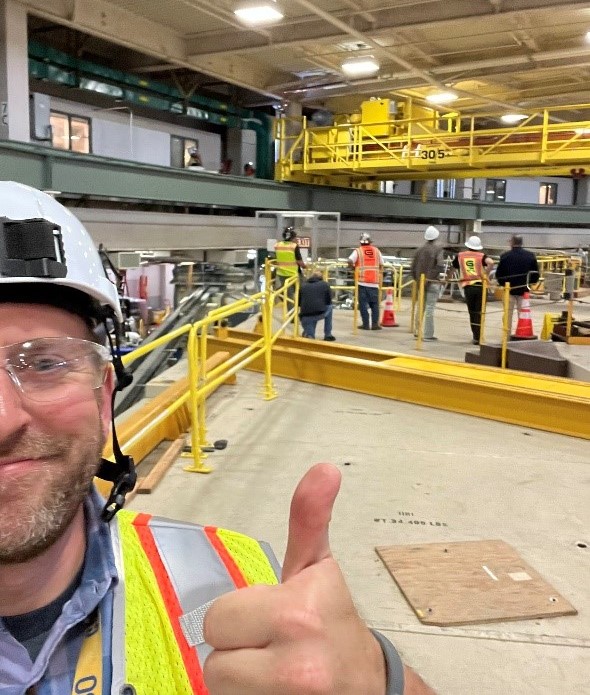
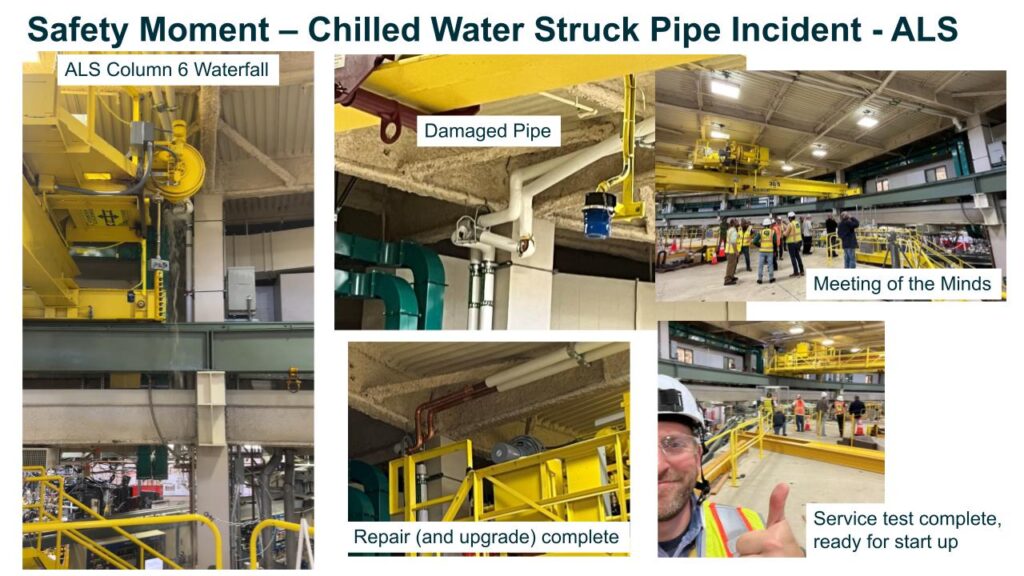
To illustrate this concept in practice, a recent event at the Advanced Light Source facility provides an
excellent example. An overhead crane struck a water pipe and several hundred gallons of water spilled
out to the experimental floor of the building. The anger and frustration and finger pointing could have
dominated the post incident conversation, but instead, cooler heads prevailed: the water was quickly
cleaned up, repairs completed on the pipe, and all equipment was inspected for water damage, and an
investigation was initiated to ensure positives actions could be pulled from this event.
The types of questions asked were focused on future improvements, not on assigning blame. Questions
were open ended and included:
- What could we do differently, both operationally and from a design perspective?
- Are there any controls we could have put in place, either when the pipe was designed or today?
- If we were to install a similar pipe with similar routing today, would we do anything differently
then we did previously? - Who are the right people to be involved in the reviews?
- Are we operating the crane in the safest manner possible? Are experts available to consult and
review our procedures?
Following these lines of questioning, and being receptive to the answers received, will lead to a better
all around program for both new installation, and existing operations. Turning a loss into a win, and not
letting a ‘good crisis go to waste’
For more information and guidance on safety incident investigations, feel free to reach out to the PIMD
EHS and team, or visit the OSHA.gov website, specifically: https://www.osha.gov/incident-investigation
Be safe out there!

